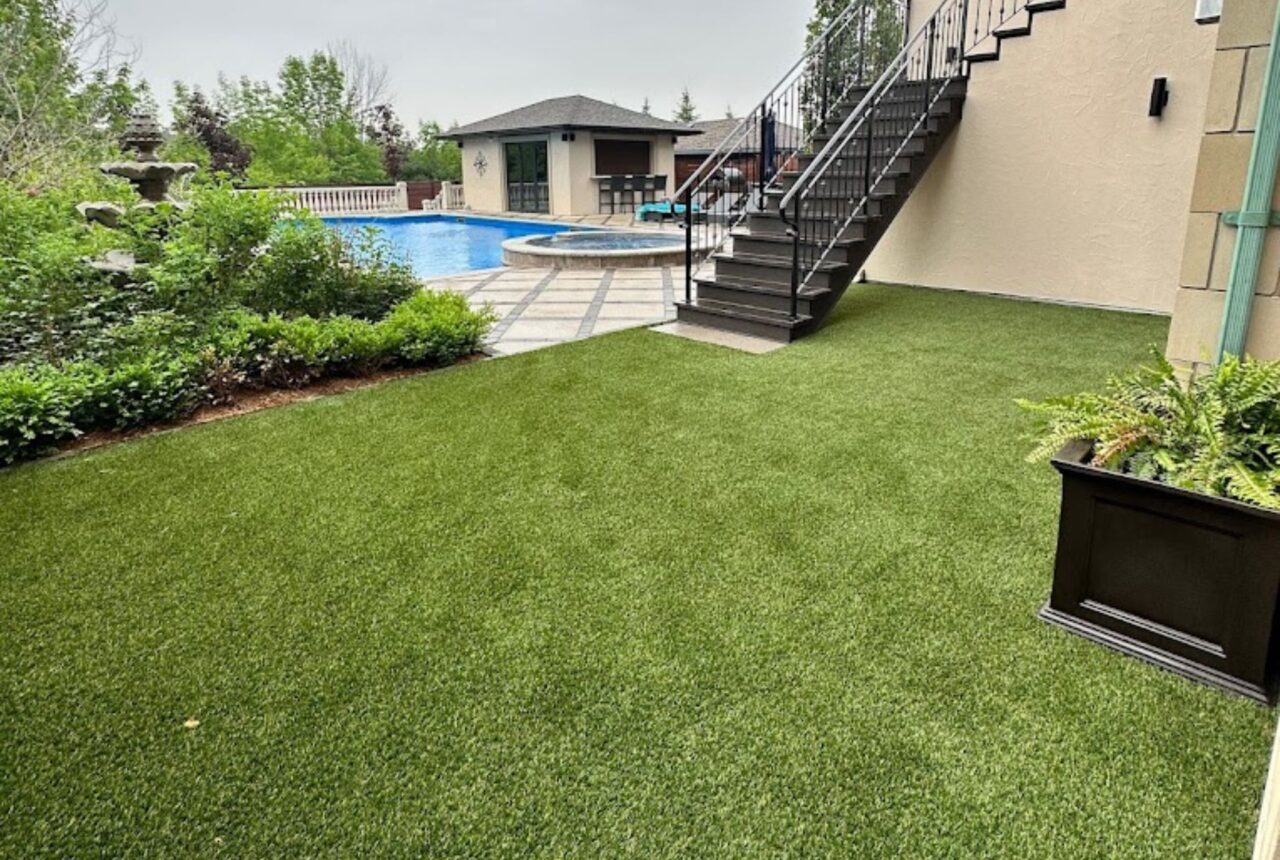
One of the biggest reasons Ajax homeowners switch to synthetic turf is that artificial grass maintenance is genuinely minimal. There is no mowing, no watering, and no fertilizing. That said, a few simple seasonal habits keep your lawn looking its best through everything a Durham Region year throws at it, from spring pollen off the Greenwood Conservation Area treeline to the leaf drop of fall and the freeze-thaw of late winter. This guide walks through what to do each season so your Ajax lawn stays clean, upright, and green for years.
How much maintenance does artificial grass need?
Very little. Plan on a light rinse and a quick debris clear every few weeks, plus a proper brush once or twice a year to keep the fibres standing tall. That is the whole routine for most Ajax yards. Compared to a natural lawn that needs weekly mowing, regular watering through a dry July, and seasonal fertilizing and weeding, a synthetic lawn asks for a tiny fraction of the effort. The tasks below are seasonal touch-ups, not chores, and none of them takes more than a few minutes for a typical backyard.
Spring
Spring is the reset after winter. Once the last of the snow and freeze-thaw is behind you, usually by April in Ajax, give the lawn a thorough rinse with the hose to wash off winter grit, road salt tracked in from the driveway, and any accumulated dust. Rake or blow off the debris that built up over the cold months, then brush the fibres against the grain with a stiff synthetic-bristle broom to lift any blades that were matted down by snow load. Spring is also a good time to check the perimeter edges and infill after a winter of ground movement on Durham Region clay, and to spot any spots that pooled water so they can be addressed early.
Summer
Summer care is mostly about keeping the surface cool and clean. During a hot Ajax stretch, synthetic turf can warm up in direct sun, so a quick spray with the hose brings the temperature down fast if kids or pets want to use it midday. Rinse off pollen, dust, and any spills, and pick up leaves or seed pods that blow in from nearby trees. If you have pet-friendly turf, hose down pet areas regularly and use a diluted vinegar and water mix or an enzyme cleaner to keep odours away. High-traffic paths, like the route from the patio to a pool or shed, benefit from an occasional brush to keep the fibres from flattening.
Fall
Fall is the busiest season for turf upkeep in Ajax, mostly because of leaves. The mature trees in older neighbourhoods like Pickering Village and along the waterfront drop a lot of foliage, and leaves left to sit and get wet can stain lighter-coloured surfaces and trap moisture. Use a leaf blower or a plastic rake to clear leaves regularly rather than letting them pile up. A blower is gentler than a rake and will not disturb the infill. Clear seed pods and acorns too, since they can work into the fibres. Doing a good clean-up before the first snow means your lawn goes into winter clean and comes out of it in great shape.
Winter
Winter is the easiest season of all. In most cases you simply leave snow to melt and drain through the turf on its own. If you want to use the space or clear a path, push light snow off gently with a plastic shovel or a stiff broom, and never chip at ice bonded to the fibres or scrape with a metal blade. Avoid using salt or chemical de-icers directly on the grass. Small amounts tracked onto the edges from your Ajax driveway are fine and rinse away in spring. Do not worry about frost stiffening the blades on cold mornings, since they soften and stand back up as the temperature rises.
Quick maintenance checklist
- Every few weeks: rinse the surface, clear leaves and debris, spot-clean spills.
- Once or twice a year: brush the fibres against the grain to keep them upright, especially in high-traffic areas.
- Pet areas: hose down regularly and treat with an enzyme or diluted vinegar cleaner to control odour.
- Fall: stay on top of leaf removal before the snow arrives.
- Winter: let snow melt, or clear gently with plastic tools only, and skip the salt.
FAQs
Do I ever need to replace the infill on my Ajax lawn?
Occasionally, in high-traffic areas. Most yards are fine for years, but heavily used paths or pet zones may need a top-up of infill over time to keep the fibres cushioned and upright. It is a quick job and your installer can top it up during a visit.
How do I get rid of pet odours on artificial grass?
Rinse the area regularly and treat it with an enzyme cleaner or a diluted vinegar and water solution. Because quality turf drains freely, urine passes through to the base, so consistent rinsing is usually enough to keep an Ajax pet lawn fresh.
Will weeds grow through my artificial grass?
Rarely, when a weed barrier was installed underneath. The odd windblown seed can sprout at the edges, but it pulls out easily. A properly built base with a barrier keeps weeds from coming up through the turf itself.
Need a hand with your turf?
Whether you are caring for an existing lawn or planning a new one, the Artificial Grass Ajax team is happy to help. Call (289) 210-8719 or request a free quote, and our local installers can advise on upkeep or a fresh backyard turf install.